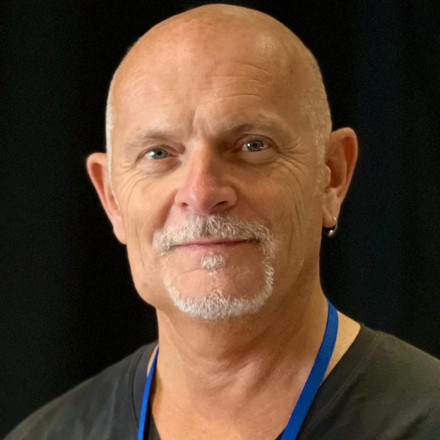
🇬🇧 Gary Carter
Myofunctional Manual therapist
Gary Carter is an internationally renowned fascial anatomy educator and manual therapist with over 45 years of experience, specializing in movement education and fascia-focused human dissection.
Gary Carter has 45 years of experience in physical training, sport and movement practice, alongside 35 years as a qualified professional in manual therapy, movement education and bodywork. His work brings together hands-on clinical experience, an extensive understanding of human movement and a deep commitment to exploring the architecture and relationships of the fascial system.
His approach has been shaped by decades of practice and study spanning structural integration, CranioSacral Therapy, Shiatsu, yoga in the tradition of Vanda Scaravelli, Chi Kung and Wing Chun. He helped bring Tom Myers’ pioneering Anatomy Trains courses to the UK in 1998 and subsequently co-taught with Tom in the UK and USA. For more than two decades, Gary has undertaken fascia-focused human dissection, integrating direct anatomical investigation with his teaching and clinical practice.
Gary is a lead team member of the Fascial Net Plastination Project and co-led the dissection team responsible for FR:EIA — Fascia Revealed: Educating Interconnected Anatomy — the world’s first full-body, fascia-focused human plastinate. His role encompassed planning, dissection and co-design, working alongside the team at the Plastinarium in Germany. Now on permanent display at BODY WORLDS in Berlin, FR:EIA represents a significant development in the visualisation and educational exploration of human fascial anatomy.
Gary leads specialist fascia-focused dissection laboratories at the Plastinarium with Jihan Adem, providing advanced anatomical study for manual therapists and movement professionals. He also teaches internationally through year-long programmes in myofascial anatomy and movement and is the principal anatomy lecturer for the CranioSacral Therapy Educational Trust’s Living Anatomy programme. Alongside his teaching and dissection work, he continues his private manual therapy practice and movement education in Brighton and London.
His work bridges direct anatomical investigation, the experience of touch and the practice of movement, exploring the relationships between the body’s structures and their relevance to how we move, feel and function.