Core Support for Cranio-Hyoid Function with Tom Myers
Learn to assess and treat the body patterns that support lasting change in the hyoid, jaw, tongue, and airway.
| Date | November 24-25, 2026 |
| Course Hours | 08:30 AM – 05:30 PM / 14 hours |
| Location | Kirchplatz 3 (Parish House), 9410 Heiden I Switzerland |
| Organizer | Tongue Time GmbH, Wolfgangstrasse 2, 9014 St.Gallen |
| Course Fee | CHF 850.- (includes morning and afternoon refreshments and electronical handout; lunch not included) |
| Course Language | English |
Registration
Registration is completed by submitting online and paying the course fee. The number of participants is limited.
Course Description
This 2-day workshop for manual therapists is designed to support work in the cranio-facial, cervico-hyoid, and glossal complex. All these structures involve intricate and ancient reflexes at the entrance to our organism, with airway, nursing, swallowing, speech, and other consequences.
These structures also lie at the top of our Deep Front Line, a continuity of myofasciae from the tongue to the inner arch. The neck-throat-jaw complex is therefore functionally central, but structurally it perches above the ribs, spine, and pelvis. For change in the tongue or the airway to be long-lasting, it must be supported from below.
To put it negatively: So much good work on the throat and jaw comes to nothing for lack of integrated support from below.
Two skills at the heart of this workshop
- BodyReading: Assess the body pattern at and below the hyoid complex to identify adjustments that offer increased support for change—especially the superior and inferior ribs, the mid-dorsal hinge, lumbopelvic stability, and the diaphragm.
- Fascial release techniques: Learn techniques drawn from osteopathy, physiotherapy, and the Rolfing tradition.
This course is a practical intensive. Familiarity with anatomy is assumed. Please come prepared to give and receive manual therapy from pelvis to jaw.
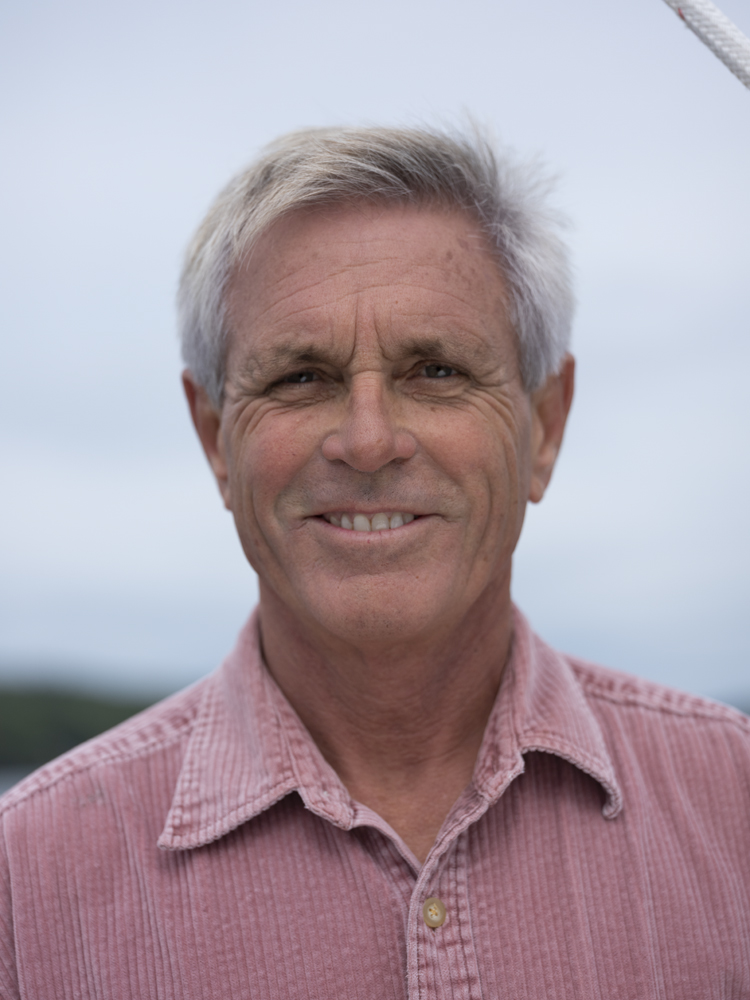
Instructor Tom Myers
Tom Myers studied with Drs. Ida Rolf, Moshe Feldenkrais, and Buckminster Fuller, and with a variety of movement and manual therapy pioneers. His work is influenced by cranial, visceral, and intrinsic movement studies he made with European schools of osteopathy. An inveterate traveler, Tom has practiced integrative manual therapy for over 40 years in a variety of clinical and cultural settings.
Tom is the author of Anatomy Trains (2020, 4th ed.), co-author of Fascial Release for Structural Balance (North Atlantic, 2010, 2017), co-author of Anatomy Trains in Motion Study Guide (2019), and author of Body3, The Anatomist’s Corner, Structural Integration: Collected Articles, and BodyReading: Visual Assessment and The Anatomy Trains. He has also written extensively for the Journal of Bodywork and Movement Therapies (Elsevier).
Tom has produced over 20 online learning courses with Anatomy Trains, as well as courses in collaboration with various body-oriented professional groups.
Tom lives and sails on the coast of Maine in the USA. Tom and his faculty conduct professional development courses and certification in Structural Integration worldwide.
Terms and Conditions
Registration is binding. Places are allocated on a first-come, first-served basis upon registration and payment.
Cancellation Policy
- Cancellation after October 27, 2026: 30% of the course fee
- Cancellation after November 10, 2026, or non-attendance: 100% of the course fee
A substitute participant may be provided at any time.
If the course cannot take place due to reasons on the organizer’s side, or if participation is not possible due to overbooking, 100% of the paid course fee will be refunded.
Agreement
By registration and payment, I agree that I will not share or teach the knowledge and techniques acquired in the Core Support for Cranio-Hyoid Function course —whether commercially or free of charge—within courses organized by myself or others. This does not include the exchange of knowledge with colleagues in a small professional context. I confirm that I will apply the techniques learned only within the scope of my professional qualifications (e.g., physician, osteopath, or physiotherapist). I acknowledge that I am solely responsible and liable for any treatment outcomes in my own practice.